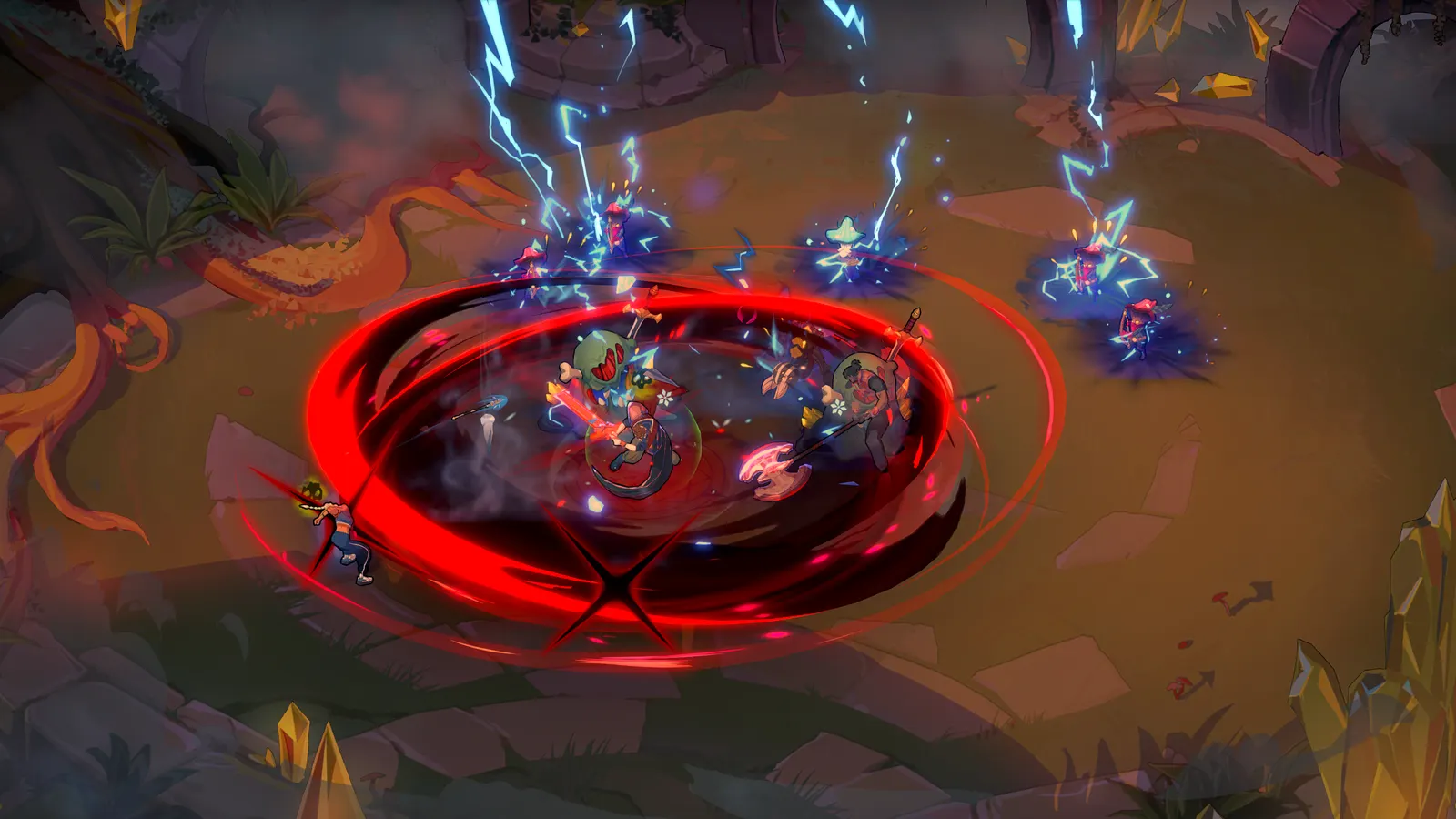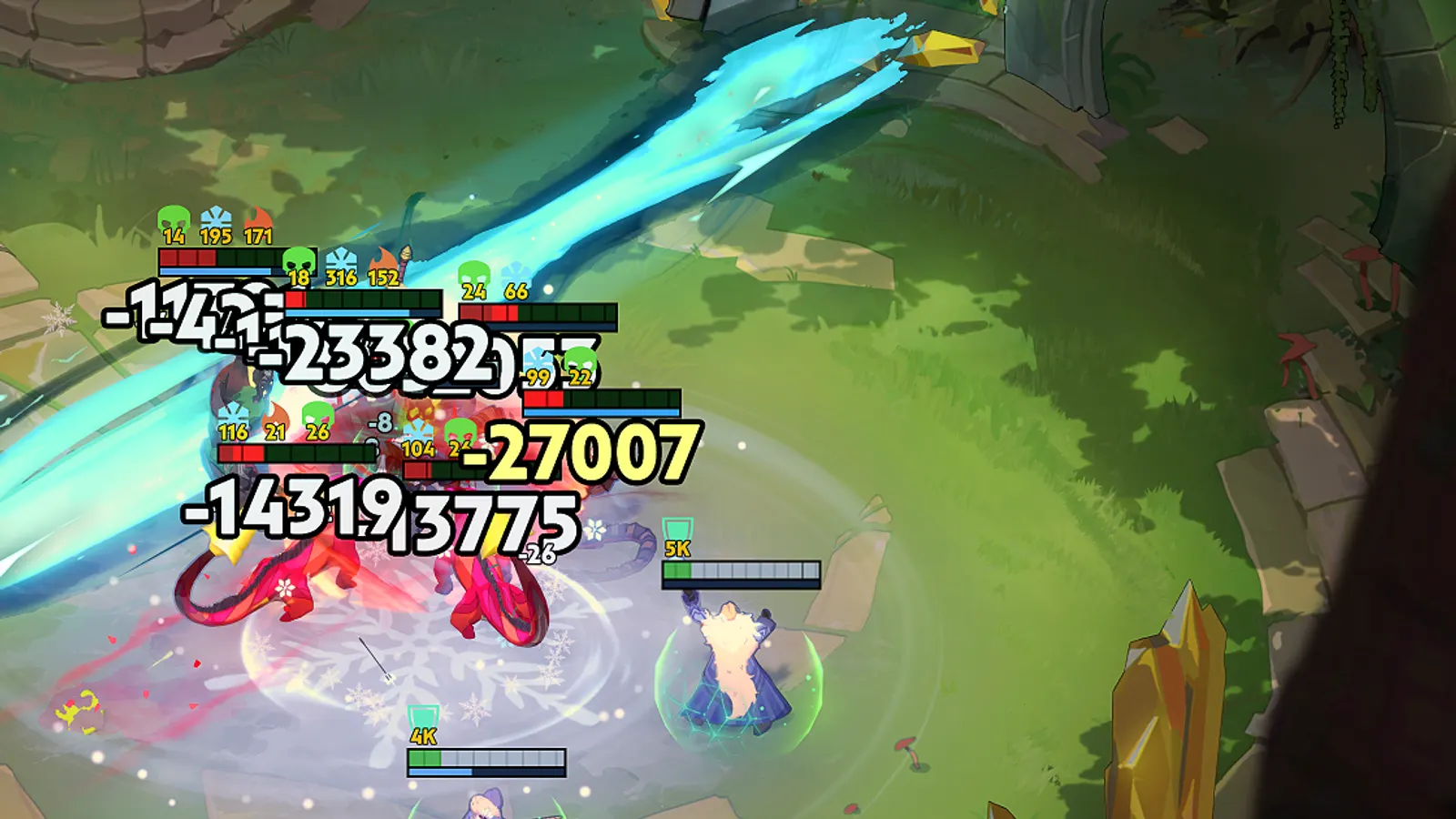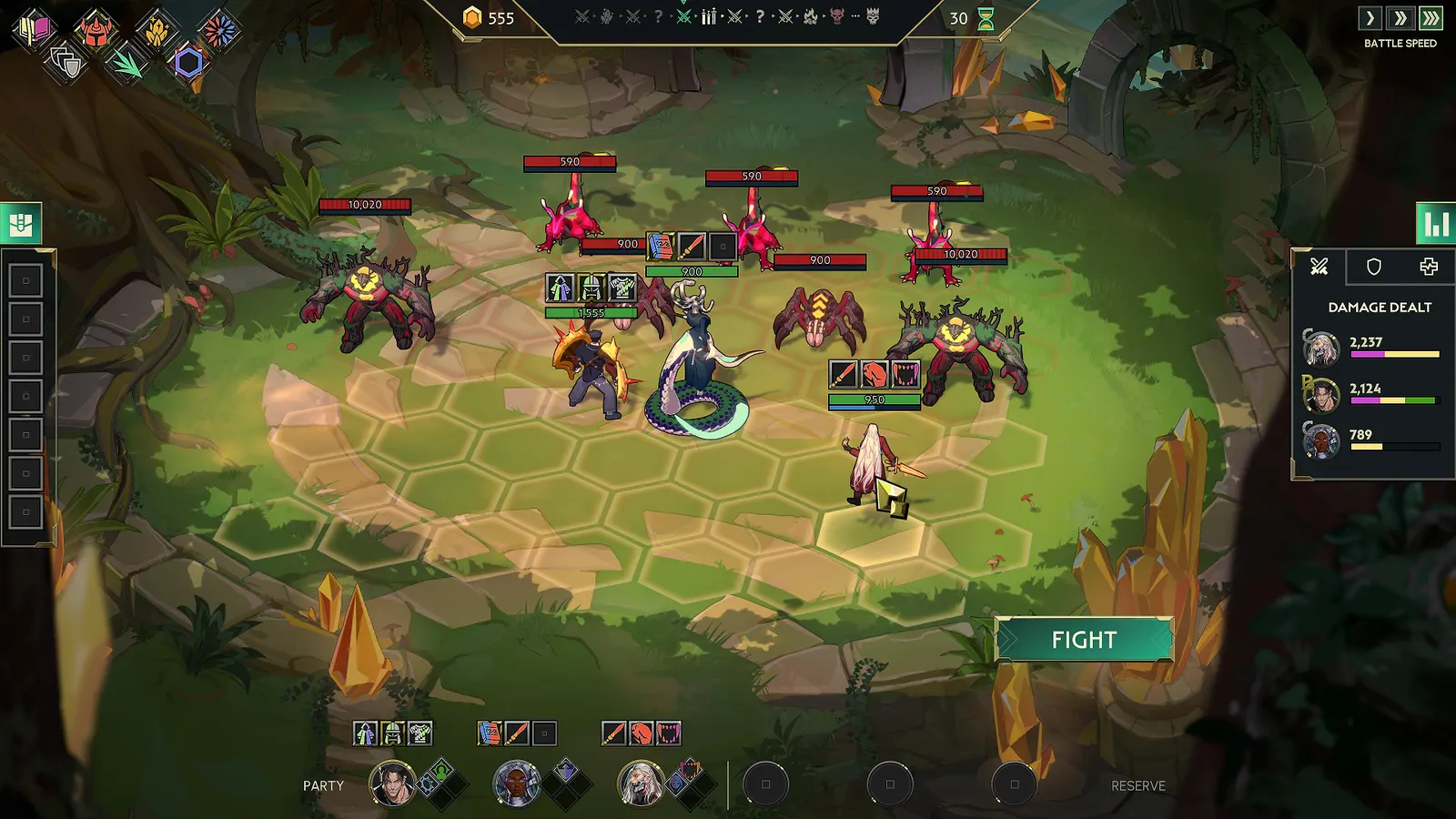
Guildrun is a PvE roguelike autobattler developed and published by Leyline (Leyline Creations GmbH), an independent studio from Munich. It was announced on 15 July 2026 together with a free demo on Steam; the full game is aimed at the first half of 2027, for Windows and macOS, with no Early Access. This guide explains what the game is and how a run is built, using only what Leyline has written: the Steam pages, the press release of 16 July, the official FAQ of 12 August and the demo patch notes. Where the official texts stop, we say so: those points are marked "to verify in the game". Names stay in English, as in the game.
The pitch, in Leyline's words
The Steam page sums it up: a PvE roguelike autobattler with no timers, no queue and no PvP. You draft a guild, rank heroes from C to S and stack more than 300 relics into builds that one-shot bosses; you climb 8 difficulties and then the Endless leaderboards. The press release adds that runs last about 20 minutes and can be opened, saved and closed at any time. The official FAQ names the inspirations: autobattlers and roguelikes, and in particular Teamfight Tactics and Slay the Spire.
The numbers of the demo, from the Steam page: 25 heroes, 180 specializations, more than 300 relics and 100 items, 8 difficulties, Endless mode. The same page also says "25 heroes across 75 spec paths" and counts more than 500 ways to level up and shape each hero. How 180 and 75 relate to each other is to verify in the game.
How a run is built
A run is a sequence of fights against monsters, with choices in between. From the patch notes:
- Starting bonus: at the start of a run you pick a bonus (the notes name All In, Bossy, Fast Track, Quantity over Quality and others). Some give Shards, some used to cost Shards.
- Shards are the currency of the run: you spend them in the shop to buy heroes (the notes mention having 30 Shards to buy 2 heroes in the first shop), to reroll the offer, and in the Auction House, where relics have a cost in Shards. Shops can be frozen to keep their offer for later.
- Board and reserve: the heroes you field fight on a hex grid; the others wait in the reserve, from where some abilities still work (see Backup in our guide to the patch notes). Before a fight there is a placement phase; the notes mention effects based on adjacency, first row and last row, and attack ranges measured in hexes.
- Team size is limited and can grow with Team Size relics (Harmony Crystal, Dominion Mandate and the other "Team Size Quest" relics, which unlock their bonus after a quest, for example 5,000 debuffs applied).
- The fight plays out by itself: heroes auto attack, build up Mana and cast their active ability (the notes tie Max Mana to how soon and how often a hero casts). It is an autobattler: you decide before the fight, not during it.
- Emergency Rewind: a second chance when you lose a fight; it holds Shards and recharges at the Act 1 Campfire, starting again from 10 Shards.
- Boss Tokens: a resource you can run out of, especially in Red Rift; patch 0.5.2 added one more, and since 0.5.7 leaving during the initial hero selection no longer costs one. What exactly they do is to verify in the game.
Ranks from C to S, specializations and class modifiers
Every hero has a starting class and a signature ability, active or passive. Heroes rank up from C to B, A and S, and many numbers in the notes scale "per rank". From the notes:
- at rank B you choose one of the hero's three specializations (the notes call it the "B-rank up moment"); Aleco's stated goal is that all three specs of every hero feel equally playable;
- at ranks A and S you choose Class Modifiers, from pools per class; Assassin, Duelist, Mage, Mystic, Tank and Vanguard appear in the notes as classes, and an item called Warrior's Greataxe suggests a Warrior class too (to verify). The Steam page says the modifier pool "stacks across classes";
- the Compendium lists class upgrades and modifiers.
The cost of a rank up and what you pay it with: to verify in the game.
Items, relics and the Auction House
- Items are equipped on a hero and give stats or effects; the notes list them by rarity (rare, epic) and mention heroes with extra item slots (Niklas). How many slots a hero has by default: to verify in the game.
- Relics apply to the whole guild and are listed by rarity: starting, common, rare, epic, legendary, plus unique relics from events and the Team Size Quest relics. The notes sometimes give a relic's full text, for example Burn Catalyst: "For Rush (15), enemies receive 50% more Burn damage."
- The Auction House sells relics (its Relic Bazaar) for Shards. The Rift Seal is a relic given at the start of each Red Rift run, auto-equipped from the second run on (patch 0.5.6).
- Crests and Glyphs are mentioned once (patch 0.5.11) as things a hero can have equipped: to verify in the game.
Acts, bosses, events
Aleco describes five "timings" in a run: Act 1, the Act 1 Boss, Act 2, the Act 2 Boss and Endless. The notes name the Act 1 Demon and the Hydra (an SSS Act Boss effect), and say that in Red Rift the Act 2 Boss resists Frost by 50%. The full game will have a 3-act structure (patch 0.5.14).
Between fights the run offers Crossroads, Campfires (the Act 1 Campfire recharges the Emergency Rewind), events with choices (the notes name The Three Urns, The Well of Temptations, Strange Fruits, Guild Banner, Fallen Beast), Challenge Fights with a modifier (Rapid Growth, Pain, Decay), Fight Events (Single Combat, Endurance) and Trials (for example 1v1 Trial), each with rewards. How often each appears and in what order: to verify in the game.
Debuffs and statuses
Three debuffs: Burn, Frost and Poison, which tick 60 times per minute (patch 0.5.6). Two Frost reduce the target's Defense and Attack Speed by 1 (four in Red Rift against the Act 2 Boss). Other statuses in the notes: Shields, Stun (with Stun Resistance for heroes since patch 0.5.5), Stealth, Damage Immunity. The stats are Attack, Magic, Defense, Crit, Attack Speed, Max HP, HP/S (health per second), Mana, Mana Regen and Omnivamp.
Difficulties, Red Rift and Endless
Eight difficulties: every successful run unlocks a harder one, and each adds modifiers. The notes name SSS and Red Rift, the highest and most demanding, with its own leaderboard, its own relic (the Rift Seal) and missions (the notes mention a Hero Deaths mission). Aleco divides the players into Climbers, who are climbing the difficulties, Endless players and Red Rift players.
Endless comes after the run: floors of increasing difficulty (the notes mention Mushroom floors 9, 12 and 15), scored on the leaderboards. There are three leaderboards, Merged, SSS and Red Rift; since patch 0.5.14 they reset every Tuesday at 7pm CEST. More in our guide to the demo.
Full game and demo
From the official FAQ (12 August 2026): the full game is planned for the first half of 2027, as a one-time purchase on Steam, price not yet set, for Windows and Mac (Linux undecided), with controller support and official Steam Deck support planned, a 2-player co-op mode, no PvP, more languages (Japanese and French confirmed). Demo progress (metaprogression, difficulty unlocks, hero mastery stars) is meant to carry over. The full game will have three acts instead of two (patch 0.5.14). Leyline has been working on Guildrun since spring 2025, and all the art is hand painted, with no generative AI, says the FAQ.
To verify in the game
Things the official texts do not spell out, which we will check in the demo:
- how 180 specializations and 75 spec paths relate;
- the cost of rank ups and the default number of item slots;
- what Boss Tokens do and how the Emergency Rewind recharges in detail;
- how Crests and Glyphs work;
- the order and frequency of events, Challenge Fights and Trials in a run.
Terms in the three languages are in the glossary; more answers in the FAQ.
Sources
- Guildrun on Steam (store page, Leyline; read on 23 October 2026) (opens in a new tab)
- Guildrun Demo on Steam (store page, Leyline; read on 23 October 2026) (opens in a new tab)
- Indie Studio 'Leyline' Announces New Strategy Game 'Guildrun' (press release, GamesPress, 16 July 2026) (opens in a new tab)
- Guildrun FAQ (Jay, Leyline, Steam forum, 12 August 2026) (opens in a new tab)
- Guildrun demo patch notes 0.5.1.718 to 0.5.14 (Leyline, Steam, 23 July to 20 October 2026) (opens in a new tab)
- Guildrun official website (Leyline Creations GmbH) (opens in a new tab)
Frequently asked questions
- Is Guildrun multiplayer?
- No PvP, by design. The demo is single-player; the full game will add a 2-player co-op mode, according to the official FAQ of 12 August 2026.
- How long is a run in Guildrun?
- About 20 minutes according to Leyline's press release of 16 July 2026, and you can save mid-run and come back later.
- When does Guildrun release and how much does it cost?
- Leyline aims at the first half of 2027 on Steam, as a one-time purchase, with no Early Access; the price has not been set (official FAQ, 12 August 2026).
Written by Pierluigi “Aldry” Cella · All authors
GuildrunMeta is an unofficial fan site and is not affiliated with Leyline Creations GmbH.